
Best adjustable drawer dividers for clothes and utensils
Compare spring, lever-lock and bamboo drawer dividers by installed span, end fittings and height. Check the drawer surfaces and loaded clearance.
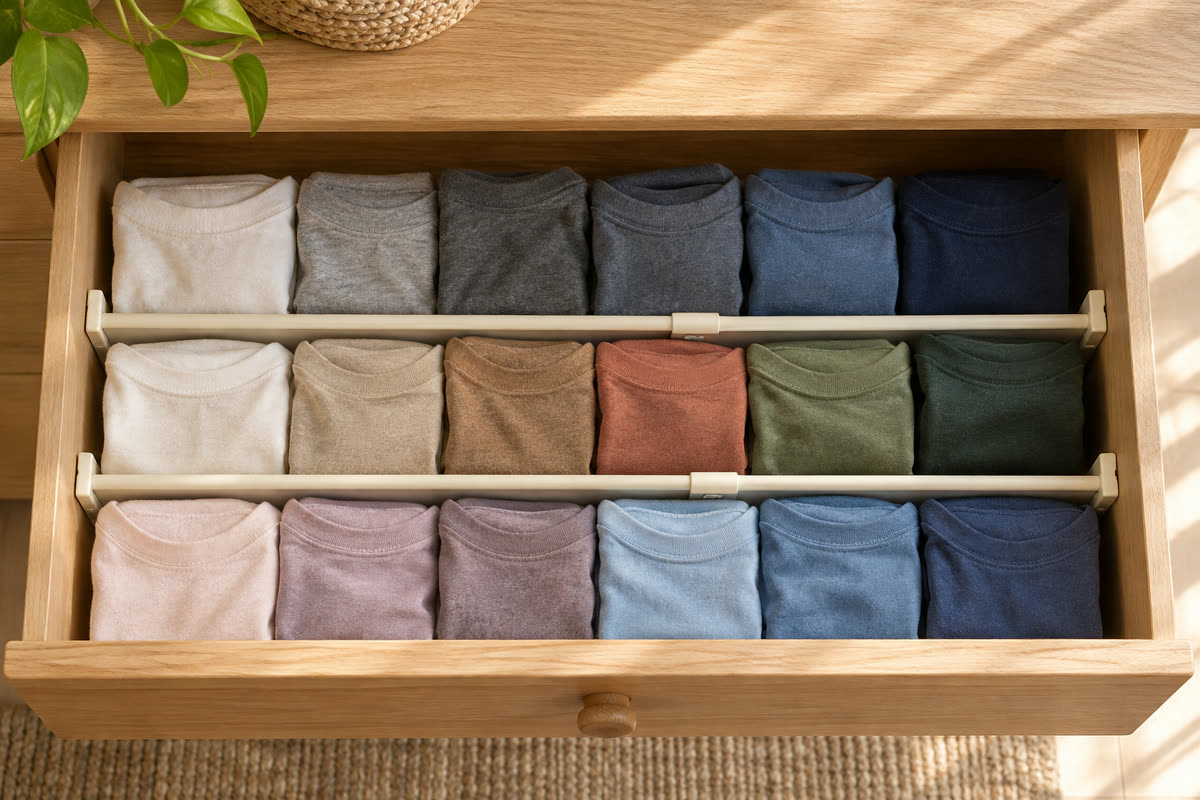
Four dividers for different spans and drawer depths
The relevant span is the measurement in the direction the divider runs. Check the fitting surface and closing clearance for the exact model.
Low divider for a long span
Lifewit white adjustable drawer dividers
Five plastic spring dividers with a top button and padded ends.
- Per divider
- 40.6–55.9 cm long × 2 cm thick × 6 cm high
- Access
- Top button and spring
- In the pack
- Five dividers
What to check Check the clear span at both pad positions, then confirm the top mechanism clears the cabinet when the drawer closes.
View on Amazon — Lifewit white adjustable drawer dividersTall rows of folded clothes
OXO Good Grips expandable dresser dividers
Two taller plastic dividers with foam ends and a locking lever.
- Per divider
- 27.9–43.2 cm long × 10.2 cm high
- Access
- Locking lever
- In the pack
- Two dividers
What to check Check the 10.2 cm height under the lowest obstruction and leave room to operate the lever. Follow the directions for the end surfaces.
View on Amazon — OXO Good Grips expandable dresser dividersRows with smaller pockets
SpaceAid short bamboo divider kit
Four padded spring dividers and nine cross inserts let you separate some parts of a row into shorter pockets.
- Per main divider
- 33.7–43.2 cm long; panel about 6 cm high
- Access
- Spring ends and cross inserts
- In the pack
- Four dividers and nine inserts
What to check The listing also gives a 6.4 cm overall height. Check installed height for a close fit and leave enough room to reach around the cross inserts.
View on Amazon — SpaceAid short bamboo divider kitWider solid drawers
Utoplike grey bamboo drawer dividers
Four spring-loaded bamboo dividers with grip pads. The recommended installed span is narrower than the loose extension.
- Recommended fit and height
- 45.2–52.3 cm recommended span; 6 cm high
- Access
- Spring tension
- In the pack
- Four dividers
What to check Use the recommended span and a suitable solid drawer. The listing asks for more than 6.5 cm of closing height.
View on Amazon — Utoplike grey bamboo drawer dividersSide-by-side dimensions
Scroll sideways to see all columns.
| Divider | Span or adjustment | Height | What to check |
|---|---|---|---|
| Lifewit 23147 | 40.6–55.9 cm | 6 cm | Top button and spring ends need clear contact |
| OXO dresser 13227200 | 27.9–43.2 cm | 10.2 cm | Higher panel and lever clearance |
| SpaceAid bamboo kit | 33.7–43.2 cm | 6 cm | Clear end pads and width for cross inserts |
| Utoplike grey short | 45.2–52.3 cm recommended | 6 cm | Maker calls for more than 6.5 cm of closing height |
Measure the span where the divider will sit
Decide whether the rows run front to back or across the drawer. Measure between the two surfaces the pads will touch, at the height of the pads. Take a reading at each position where you plan a divider. A drawer can narrow near the back or have a curved front. Measuring the width at one convenient point can miss the tight spot where a particular row will start.
Check the fit against the maker's specified operating range. A spring divider needs sufficient contact to stay in place. A model with a lever can use a separate locking motion after you set the length. Measure with the furniture in its normal position and follow the directions for fitting and removing it. Avoid using the loose maximum length as a proxy where the maker gives a narrower installed range.
Check the end surfaces and the height above them
Inspect both ends of the proposed row. The pads should sit where the model instructions allow, with a clean and stable contact area. A screw head or bevel can tilt a divider under pressure. If one contact point is thin or flexes when gently handled, check the furniture instructions and choose a tray if a pressure fitting is unsuitable. Avoid placing a divider where it would interfere with the drawer runners or a latch.
Measure the highest part of the fitted unit, including the release button or locking lever. Check the lowest rail or fixing across the closing route. Then include the tallest clothes or utensil handles. A liner beneath the divider can change the starting height or how the pads sit. Our drawer measuring guide shows how to check the movement as well as the base.
Choose the fitting style for the things you store
For a longer run with a low panel, the Lifewit five-pack extends from approximately 40.6 to 55.9 cm, with a 6 cm-high body. The plastic divider uses a top button and spring mechanism with padded ends. Check the contact surfaces and clearance around the top before fitting several.
For tall rows of clothes, the OXO dresser pair adjusts from about 27.9 to 43.2 cm. Its 10.2 cm height supports a taller layout where the drawer has room. Check how the lever closes and leave clearance above the whole unit. A shorter divider can suit a shallow drawer where tall folds already take up the closing height.
For rows with smaller pockets, the SpaceAid kit includes four bamboo dividers and nine cross inserts. The dividers adjust from approximately 33.7 to 43.2 cm. The listing describes a panel around 6 cm high and also gives 6.4 cm overall, so check the installed height if clearance is tight. Use the cross pieces for socks or small accessories and leave longer pieces in a continuous channel.
For a wider solid drawer, the Utoplike grey four-pack has a recommended drawer span of 45.2 to 52.3 cm and requires more than 6.5 cm of closing height. The spring-loaded bamboo dividers physically extend farther. Work from the recommended range when you measure and check the drawer surfaces can support their intended use.
Fit one row and try your normal routine
Start with the group you take out most often. Fit one divider according to its instructions and move the empty drawer gently. Put in the widest folded garment or the biggest utensil you want in the row. Check the divider stays in position while you reach for an item and put it back. Repeat with the drawer loaded as you normally keep it.
Leave enough room for the grip you use. A tightly folded row might appear efficient until you need to reach the item in the middle. If the divider moves, check the installation and contact surfaces before changing pressure. If you mainly want to lift out a group together, compare modular trays or clothes bins. Our dividers vs trays guide helps decide which format should occupy each part of the drawer.
Questions before you choose
Do I measure width or depth for a drawer divider?
Measure in the direction the divider runs. Take the distance between the surfaces its pads will touch.
Is a divider's full extension the right buying measurement?
Use the maker's recommended installed span where supplied. The longest physical extension can be greater than the supported installed size.
Can I fit a spring divider against a thin front?
Follow the model's directions for the contact surfaces. Choose a different layout if the surface flexes or cannot support the pressure.
Do drawer dividers fit sloping sides?
Check that both pads sit as designed across their full contact area. A slope can change the span and make an end unstable.
Can I put one in a shallow kitchen drawer?
Measure the lowest point along the closing path. Include the highest part of the divider, any base liner and the items in each row.
When do cross inserts help?
Use them where a long row needs shorter pockets. Check how much width they use and leave enough room to lift the items out.
How this shortlist was assembled
We compared four exact Amazon UK variants with maker fitting information where available. Published ranges and recommended installed spans are labelled separately. Drawer and row measurements in the example are illustrative.