
How to organise a wardrobe with sliding doors
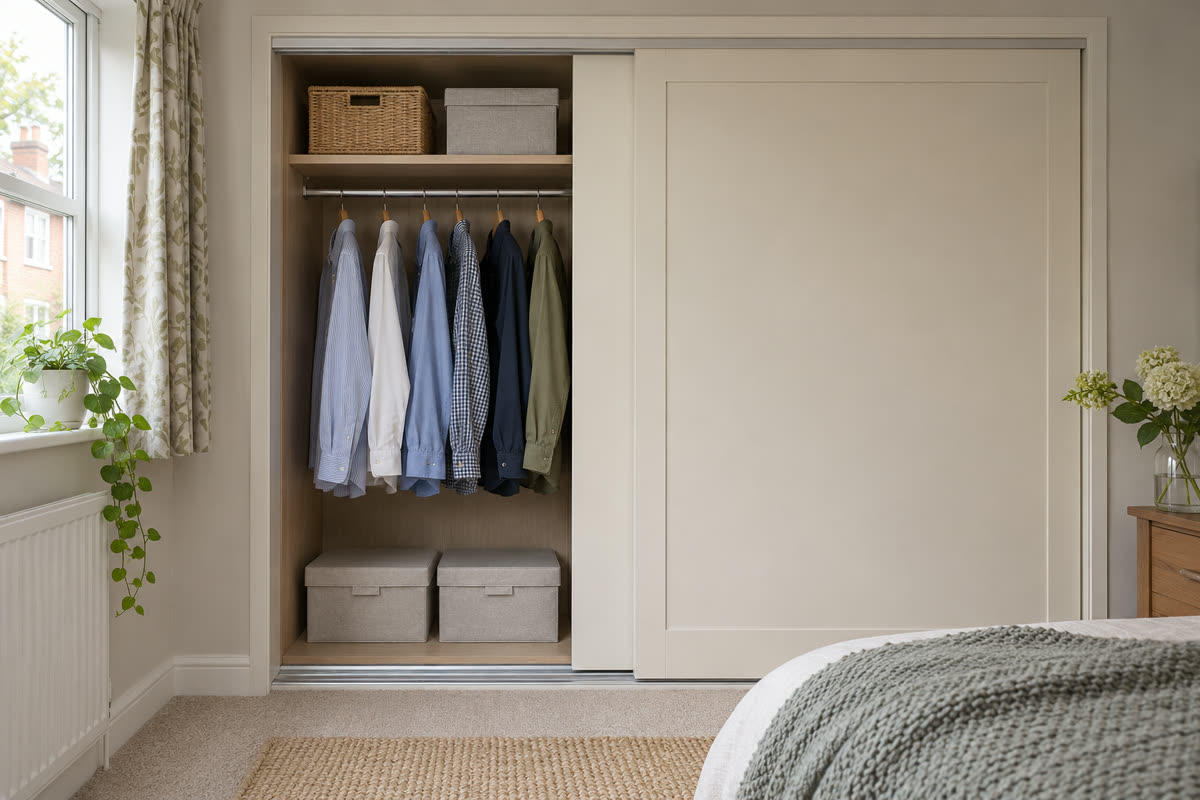
Map the accessible openings behind sliding doors. Place hanging clothes, bins and drawers where you can use them without striking the track or panels.
The main decision
Give each sliding opening its own storage zone
Measure what each door position actually exposes. Keep drawers and fitted baskets within a single clear opening. Use narrower lift-out bins where a door covers part of the shelf, and keep anything you use every day within reach of the normal opening.
Map both door positions
Slide the first door as far as it normally goes without forcing it. Measure the clear width from the nearest fixed side to the inner edge of the exposed door. Take the reading at the intended height of your storage. A vertical trim or recessed handle can change the edge you need to work around. Repeat at the bottom and the top, and draw the gap on a simple plan. Move the doors to the other side and repeat.
Mark the edge of the opening with low-tack tape where you can remove it easily. Stand where you normally reach into the wardrobe. Note which bays you can approach straight on and which you have to reach across. An opening that works well from a clear bedroom floor can feel much narrower when it is next to the bed. Record the free space in front at the height of the item you plan to withdraw.
Check the front lip or lower track next. An object on the wardrobe floor may have to lift before it can move forward. Check the space under the first shelf to allow for that lift. Keep the track clear and avoid dragging a loaded box across it. Follow the manufacturer's care instructions if the doors no longer slide normally.
Give each reachable bay a job
Put the clothes you reach for most in the easiest opening. Use the other side for a second person's everyday clothes or things that can be grouped and reached less often. If the doors allow only one bay to be open at a time, keep items used together in the same bay. A belt that hangs behind the other door adds an extra move to every morning.
Hanging clothes can sometimes move along a continuous rail into reach. Check that supports and dividers allow that movement. Keep dense groups or hanging shelves where you can reach their full width through the opening. Leave space between the hangers and the doors so the shoulders and sleeves do not push against a moving panel. Use the hanging organiser guide to compare rail width and assembled drop.
For folded clothes, choose a few smaller groups that you can lift out through the clear opening. Keep the handle where you can see and grip it. If you need the second door position to grab the other end of a container, use a shorter bin or move it towards the opening. On a deep shelf, keep the frequently moved front group light and within easy reach.
Check the whole path of anything that pulls out
A drawer needs clear space across its entire width and height during the pull. Check both sides, the drawer front, projecting handle and every runner or stop. Leave room outside the wardrobe for the fully extended drawer and the person using it. Include any bed frame, radiator or stool that sits across the extension path. If you need to step sideways around the open drawer to reach it, repeat that movement in the room.
Check the wardrobe model, frame depth and sliding-door arrangement against the basket or drawer instructions. Use the required hardware, mounting holes and installation method. Do not move stops, drill new runner positions or modify a door to make a fitting work unless the manufacturer specifies that setup. If the supported mounting position and your door opening do not line up, use a lift-out bin instead. Compare the exact mounting approaches in the pull-out basket guide.
Test the loaded layout in a real routine
Try one group before reorganising the whole wardrobe. Take out a folded item, then a longer garment and an accessory. Watch whether the doors need to move more than you expected. Check that one person can reach the right items without blocking the other from the rest of the room. Give the most frustrating group a clearer place before buying additional fittings.
Shut and open both doors gently with the bins and hangers loaded as you intend to use them. Look for soft fabric bulging into the track or a handle shifting as you move the door. Where the opening controls the layout, measure it again after any wardrobe adjustment. The wardrobe measuring guide has a fuller check for shelves, rails and door fittings.
Questions before you choose
Can I put drawers behind sliding wardrobe doors?
Yes, if the exact frame and door arrangement support the drawers and the whole moving part clears the exposed opening. Include handles and any furniture opposite.
Should I measure the whole wardrobe opening?
Measure each opening with the doors in their usable positions. The panels overlap, so that number can be smaller than the width inside.
What should I store behind the overlap?
Use space near the overlap for hanging garments that can slide into reach, or light items you can grasp from the clear part of a shelf.
Can a bin be wider than the clear opening?
It may come out on an angle if you can support it safely and it clears the sides, rail and track. For daily use, a bin that comes straight out is easier to handle.
How much space should I leave above the track?
Check the height of the track or front lip and the lift needed for the loaded container. Keep handles and contents clear of the moving panels.
How can I check the door still closes?
Try the closed position with the wardrobe in use. Move hangers along the rail, check sleeves and protruding handles, and keep the track clear.
How we put this guide together
The plan and dimensions are illustrative. We separate the available bay from the narrower opening created by the doors. Use the instructions for your exact wardrobe, doors, runners and mounting hardware.