
How to share a small wardrobe
Divide a shared wardrobe by real rail width, garment drop and reachable shelf space. Give both people room to take clothes out and put them back.
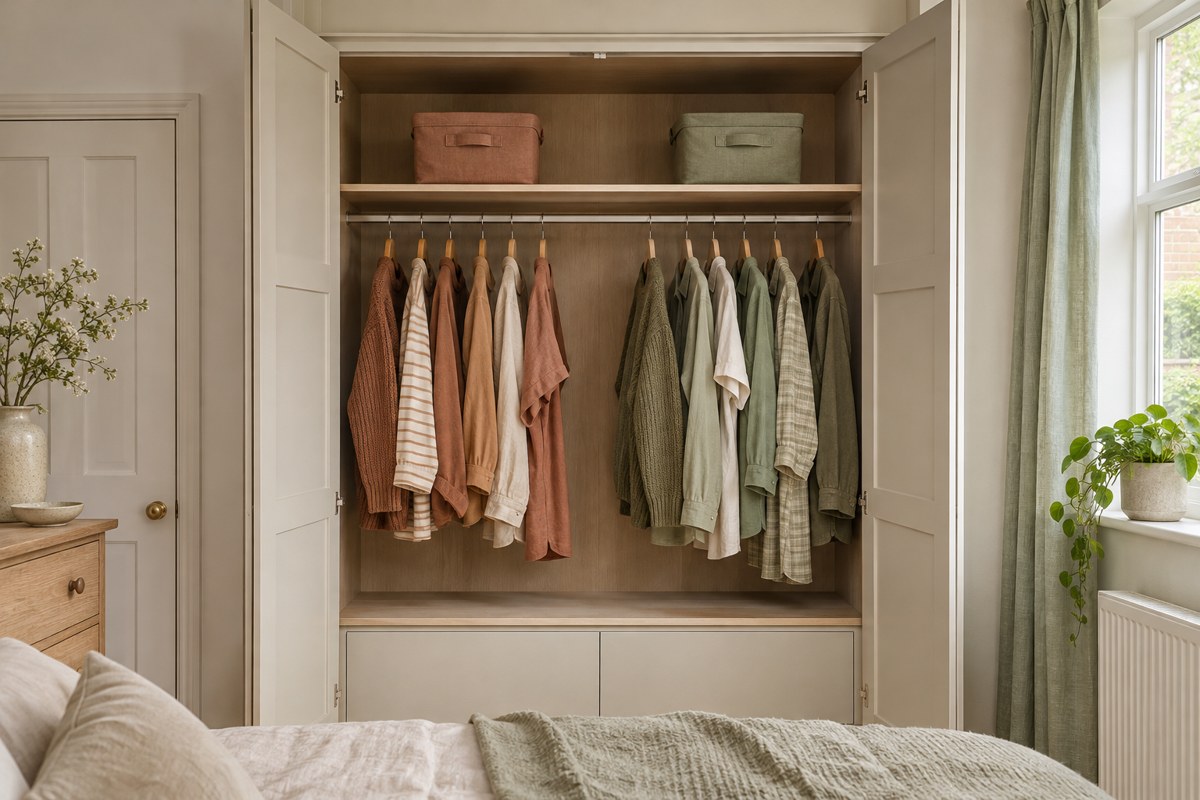
The main decision
Give each person a reachable section
Measure the everyday hanging and folded clothes for both people. Allocate the useful opening first and put shared or occasional items where they can come out independently.
Measure the clothes each person uses now
Take out the pieces each person wears in a normal week. Sort them into long hanging, short hanging and folded groups. Measure the rail width the hanging clothes occupy with enough space to lift out one hanger. Measure the widest and tallest folded stacks. A count of garments can hide differences in bulk between shirts, coats and knitwear. Use the clothes themselves to decide how much room each group needs.
Put seasonal and occasional clothing aside while you make the first layout. It can go back later if there is a suitable position. Decide where both people stand to use the wardrobe, and which parts of the opening are easiest to reach. A hinge or a bedside table can make one section less useful even when both sides of the cabinet look equal. The wardrobe measuring guide explains how to find the smallest usable opening and full hanging drop.
Give each person a position they can reach independently
Try one personal section on each side where the opening works for both. Give a separate space to any long garments that would otherwise hang across both people’s folded clothes. Where there is only one tall bay, group all long items there and use a consistent order so each person can identify their own. Put the most-used pieces at a comfortable height for the person who retrieves them.
In a sliding-door wardrobe, move each door to the position used most often and check what it actually exposes. Give each person a zone that can be reached through that opening. A bin that spans the door overlap may need to be emptied or moved sideways before it will come out. Try two narrower bins in the available space and leave room for fingers. See the sliding-door layout guide for a check of the clear opening.
Decide which spare spaces can hold a separate group
Use the spare area under short hanging clothes only after checking the lowest hem and the space needed for your hand. A low drawer or an open case can be useful where it leaves the hanging garments clear. A second rail can hold more short pieces where the original rail and its fixings are rated for the full load. Compare second-rail options for the measurements to check. Use a separate tall bay for anything that needs its full drop.
If you share bedding or an out-of-season group, give it its own position. Put it where one person can lift it down without clearing the other person’s shelf. A high shelf is useful for suitable light groups that you use occasionally. The top-shelf guide covers opening clearance, grip and handling. Put dense stacks lower where you can lift them comfortably.
Use bins or dividers only if they give each group a clear home. Check the usable space lost to handles and walls, especially on a shallow shelf. Try a stack without an insert first. When you find a layout that works, mark each side with a clear label or use a regular position that both people can remember.
Try a normal week and move the groups that get in the way
Each person should be able to take out a daily item and put it back without moving the other person’s things. Try that while the wardrobe doors, drawers and nearby furniture are in their normal positions. Check where clothes land when they come back from the wash. If clean clothes gather on one shelf, the group may need more reachable width or an easier way to put the pieces away.
Check the shared rail at the point where the two groups meet. Leave enough space to slide each group a little when selecting a hanger, and keep any divider inside the usable opening. If one person’s clothes regularly move into the other section, see whether a deeper fold stack or one shared long-hanging position would give that group more room.
Try a separate laundry return position if folded clothes are put away at different times. Keep it small enough to empty into the assigned bays during the normal routine.
Review the allocation when seasons change. A similar number of winter garments can need much more rail width and shelf height. Move an occasional group before trying to squeeze more pieces into the daily section. If only the folded shelves are the problem, use the knitwear guide to try a different fold or smaller stacks.
Questions before you choose
Should we split the wardrobe equally?
Start with reach and the actual space each person’s daily clothes occupy. A useful split may give one person more rail and the other more shelf space.
What if we have only one rail?
Group the daily hangers by person and leave room to lift them out. Reserve a clear tall section for long garments if both people need it.
How can we share a sliding-door wardrobe?
Set each person’s daily group in a part that one door position exposes. Check that drawers and bins can pass the opening.
Where should shared bedding go?
Give it a labelled group that both people can reach independently. Keep heavy cases low and use the top shelf only for suitable light groups.
How do we make room for winter clothes?
Remeasure the actual hanging width and folded height, then move occasional groups elsewhere if the daily section becomes crowded.
How we put this guide together
We used manufacturer wardrobe layouts to compare two-bay and shared-rail access. The rail allocation example uses illustrative widths and hand space.