Skip to content

Hallway

Shoe storage for narrow hallways

Find shoe storage for narrow hallways. Compare slim cabinets, racks and benches, then check door swing, shoe fit and a clear walking route.

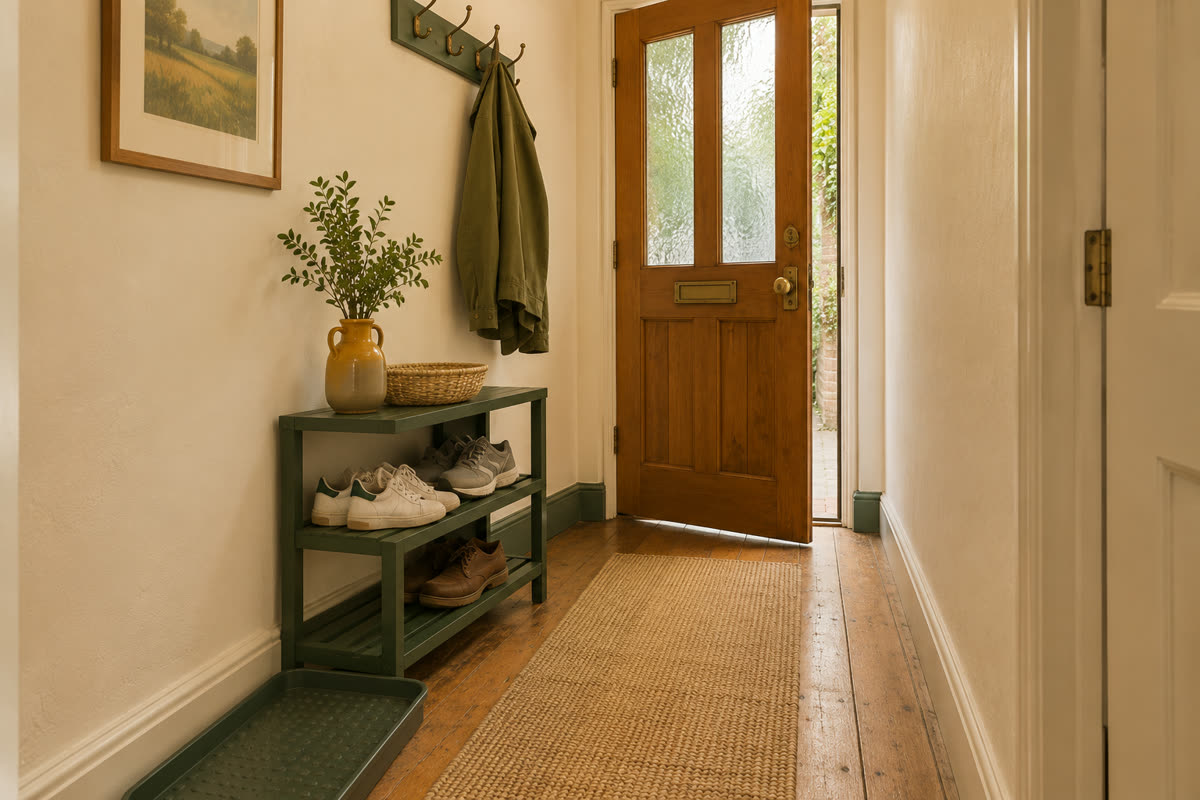
A narrow hallway with a low open shoe rack, a boot tray and a clear route to the front door

A useful first step

Measure the entrance with the door open

Include skirting, loaded shoe depth, opening compartments and the route people use through the hall.

Open the measuring guide

Explore the whole topic

All hallway shoe storage guides

Compare products when you need something new, or find a layout for what you already own.

Decide which shoes earn a place by the door

Count the pairs you reach for most often. Everyday trainers can sit on an open rack where they are easy to pick up. Walking boots and chunky soles may need a taller shelf or a boot tray. Move occasional pairs elsewhere before buying a larger unit for the hallway.

An open rack for everyday pairs

The SONGMICS rack below has a 30 cm deep frame and three levels. Check the full 92 cm width against your wall and then place your longest shoes where the rack will sit. Footwear can project beyond the frame and reduce the walking space.

For an open stretch of wall

SONGMICS 3-tier shoe rack

Three open tiers keep everyday shoes within reach. The 30 cm frame depth is useful where a deep cabinet would crowd the hall.

Outside · cm
92 × 30 × 55
Access
Open shelves
In the pack
One rack

What to check Allow 92 cm of wall width and check how far your shoes project past the rails. Follow the supplied instructions for assembly and securing the rack.

View on Amazon — SONGMICS 3-tier shoe rack

Compare the space a rack and a cabinet need

An open rack has no door to swing out, but shoes remain visible. A flip-down cabinet conceals them when closed and needs extra space in front to open. Compare the open footprint with the space left when the front door is also open.

Open rack

Easy to reach for daily pairs. Measure shoe overhang as well as the depth of the rack.

Closed cabinet

Hides footwear between uses. Check internal shoe length, the tilt of each compartment and any required wall fixings.

Boot tray

Gives muddy pairs a defined place. Compare the usable tray base with the soles, and leave it clear of the door.

If you rent, choose a unit you can install as the manufacturer requires. For out-of-season shoes, compare the usable depth in your wardrobe or under the bed.

Measure the entrance before choosing

Use our narrow hallway measuring guide to record skirting, door swing, loaded shoe depth and the open footprint. Its worked example shows why the rack's frame depth can understate the space it occupies with shoes in place.

Back to all hallway shoe storage guides

Questions before you choose

How shallow should hallway shoe storage be?

Use the space available in your particular hall. Include installed stand-off, shoe overhang and open compartments, then check door movement and the remaining route.

Will my shoes fit a slim cabinet?

Check the internal compartment and the opening mechanism against shoe length, sole thickness and height. A cabinet’s outside depth alone cannot establish shoe fit.

Does narrow shoe storage need wall fixing?

Follow the exact model’s instructions. Many shallow cabinets require fixing; choose a product with an installation you can carry out rather than omitting required anchors.

Where should I put wet or muddy shoes?

Use a suitable tray or open area where the footwear can dry as its maker recommends. Keep wet soles away from clean pairs and check the storage surface is suitable for moisture. A closed cabinet is better used for dry footwear.

Should every pair of shoes stay by the front door?

Start with the pairs each person uses regularly. Move occasional or seasonal pairs elsewhere when the hallway cannot hold them without narrowing the route. Measure your actual shoes rather than relying only on a stated pair count.

How this guide is put together

We group the guides around the space, the contents and the way you need to reach them. Product examples use published specifications for the linked model, with limitations explained beside each recommendation.

The checklist is a planning aid. Confirm the exact variant, installation requirements and loaded access before buying. Our editorial policy and source policy explain how we compare products and handle incomplete or conflicting details.

Explore another storage area