
How to organise a wardrobe with no shelves
Turn a rail-only wardrobe into useful hanging and folded storage. Measure garment drop, organiser width and floor space before choosing inserts.
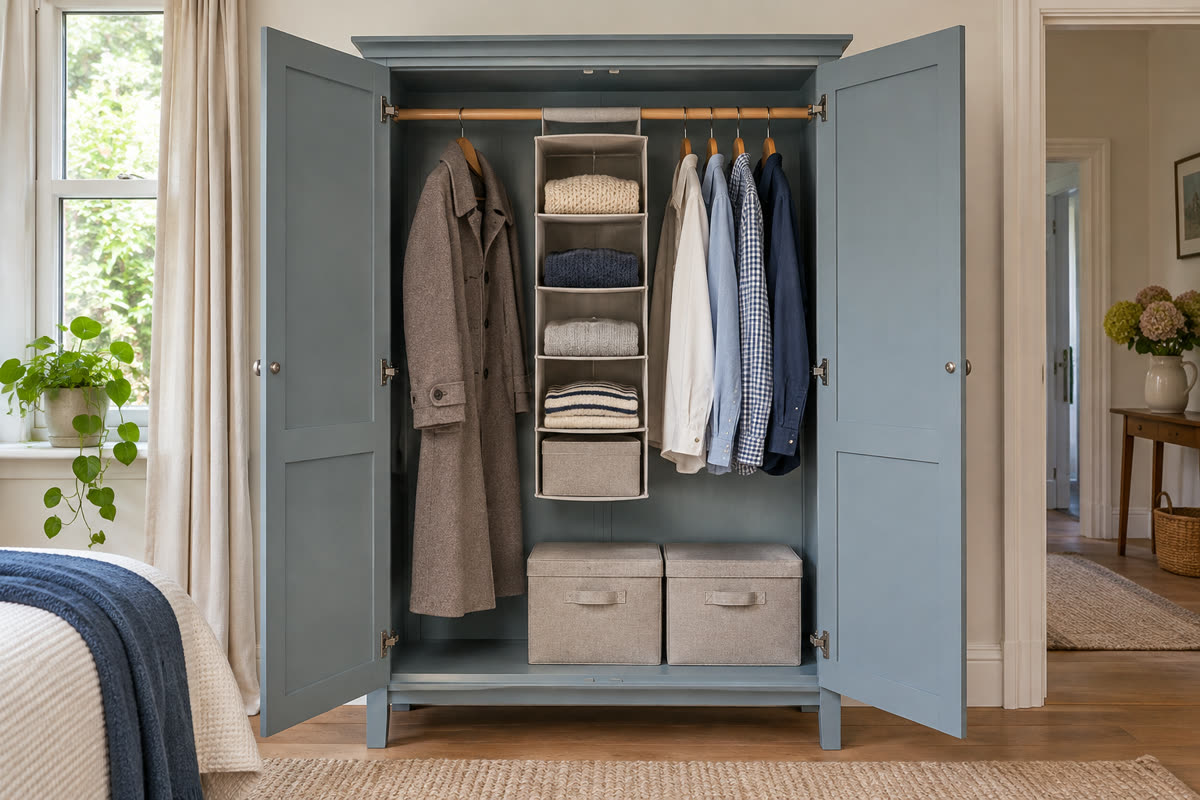
The main decision
Separate long hanging from short hanging
Keep a full-drop section for long clothes. Group shirts and other short clothes together, then use the space beneath them or beside them for folded items. Measure the rail, complete hanging drop and floor opening before adding an organiser.
Sort clothes by the space they use
Empty one section at a time and separate what you wear regularly from pieces you can store elsewhere. Hang the garments that need the most drop first. Use their usual hangers, because a longer hook or a different shoulder shape can move the bottom edge. Measure from the top of the rail to the lowest hem in each group. Include belts, ties and sleeves that hang below the rest of the garment.
Create a long-hanging section for dresses and coats, then a short-hanging section for shirts or skirts. Group by length within each section so the available floor space is easy to see. Try the layout with the doors closed and check that sleeves do not get dragged across a hinge or pinched against a door. Once you can see the gap under short clothes, decide which folded items would be easiest to reach there.
Give dense or fiddly items their own zones. A deep pile of socks is harder to search than a small bin you can take out and set down. Fold knitwear into low stacks where you can lift a piece without pulling the whole group out. Put spare linen or off-season clothes on a separate shelf or in suitable under-bed storage if you only need them occasionally.
Divide the rail space before adding hanging shelves
Measure the clear rail length between its supports. Slide your everyday hangers together as you would use them, leaving enough room to move them with one hand. Mark the part left for an organiser and measure the distance to the door and back panel. A 30 cm deep fabric unit can press against doors where the rail is offset, especially with full shelves that bulge slightly.
Record the complete drop from the rail down to the organiser's lowest point. Check whether the maker's figure includes hooks or straps. If there is a unit below, leave room to take something out of the bottom cubby without brushing it. Use the wardrobe measuring guide to check the smallest opening and any hinges at that height.
The SONGMICS sand-beige set below has two five-shelf organisers. Each occupies 30 cm of rail width, so start with one if you need to keep most of the rail for clothes. The listed body height is 90 cm. Check the total installed drop before you choose what goes underneath it.
For a wardrobe with spare rail space
SONGMICS hanging organisers, set of 2
Each five-shelf organiser uses a 30 × 30 cm footprint beneath the rail. Open compartments put folded clothes at different levels.
- Outside · cm
- 30 × 30 × 90
- Access
- Open compartments
- In the pack
- Two organisers
What to check Confirm the complete assembled hook-to-bottom drop against your bay. Each shelf is rated for up to 2 kg, with 10 kg total per organiser. Check the wardrobe rail’s capacity.
View on Amazon — SONGMICS hanging organisers, set of 2Check the wardrobe's documented rail and support capacity, then check the organiser's limits per shelf and in total. Account for the organiser's own weight. Start with light folded tops and reserve bulky or heavy pieces for a suitable supported base. See the hanging organiser comparison if width or the number of compartments changes your choice.
Use the floor beneath short clothes
Measure between the floor and the lowest hem. Take that reading at the shortest point, including the way shirts move when you slide the hangers. Measure the usable opening at floor level as well. The sides of the wardrobe, hinge arms and any lip at the door track can narrow the space that a bin or low unit needs to pass through.
Try a low handled bin for folded trousers or spare jumpers. Measure with its contents at the intended height and check that the handle stays accessible. Two smaller bins may be easier to lift through a restricted opening than one full-width box. If you consider a floor-standing drawer unit, follow the instructions for installation and anchoring and check the space in front for its complete travel. A flexible bag that needs two hands to lift is usually better for occasional items than something you need each morning.
Try the routine before filling the wardrobe
Use cardboard to mark the footprint of a planned bin and suspend an empty bag to represent the width of hanging shelves. Put back the clothes you want on the rail. Try getting dressed with the doors open as far as they normally go. Reach for a shirt, a folded top and whatever you keep lowest. If one step means moving several other things, reduce the number of groups in that zone or switch to narrower storage.
After installation, load one area at a time and watch for contact with hems, visible strain at the attachments or difficulty closing the door. Keep the floor clear of anything that needs a permanent spot outside the wardrobe. If sliding doors are the limiting factor, use the sliding-door layout guide to assign each group to a reachable opening. The wardrobe storage bin guide compares ways to lift folded groups out together.
Questions before you choose
How do I add shelves to a wardrobe without drilling?
Choose hanging shelves that fit the existing rail, or a floor-standing insert designed for that setup. Follow the exact fixing instructions and check how the doors open.
What should stay on hangers?
Keep garments that need their length or shape on hangers. Fold items such as many jumpers and T-shirts where their care instructions permit and you can reach them easily.
How many hanging shelves can my rail support?
Check the wardrobe and rail's documented limits and include the organisers themselves and existing clothes. The shelf limit for an organiser is a separate figure.
Can I put drawers under hanging clothes?
Measure from the longest hem above them to the floor and check that you can open the drawer without catching fabric. Use a unit suitable for its intended installation and check any required fixings.
How do I stop clothes getting lost in the bottom?
Use a handled bin for one group of items and keep it within reach through the doors. Leave room to grip and lift it when loaded.
Where can I put clothes that don't fit this layout?
Move occasional pieces to a separate suitable place before using more of the wardrobe floor. Keep a small set of everyday clothes closest to the opening.
How we put this guide together
The measurements in the worked layout are illustrative. The hanging organiser example uses the published dimensions and load ratings for the exact SONGMICS two-pack. The wardrobe and rail instructions govern the installation.