
Best double hanging rails for wardrobes
Compare fixed and adjustable hanging rail extenders. Measure the two garment drops, host rail fit, lower bar width and combined load.
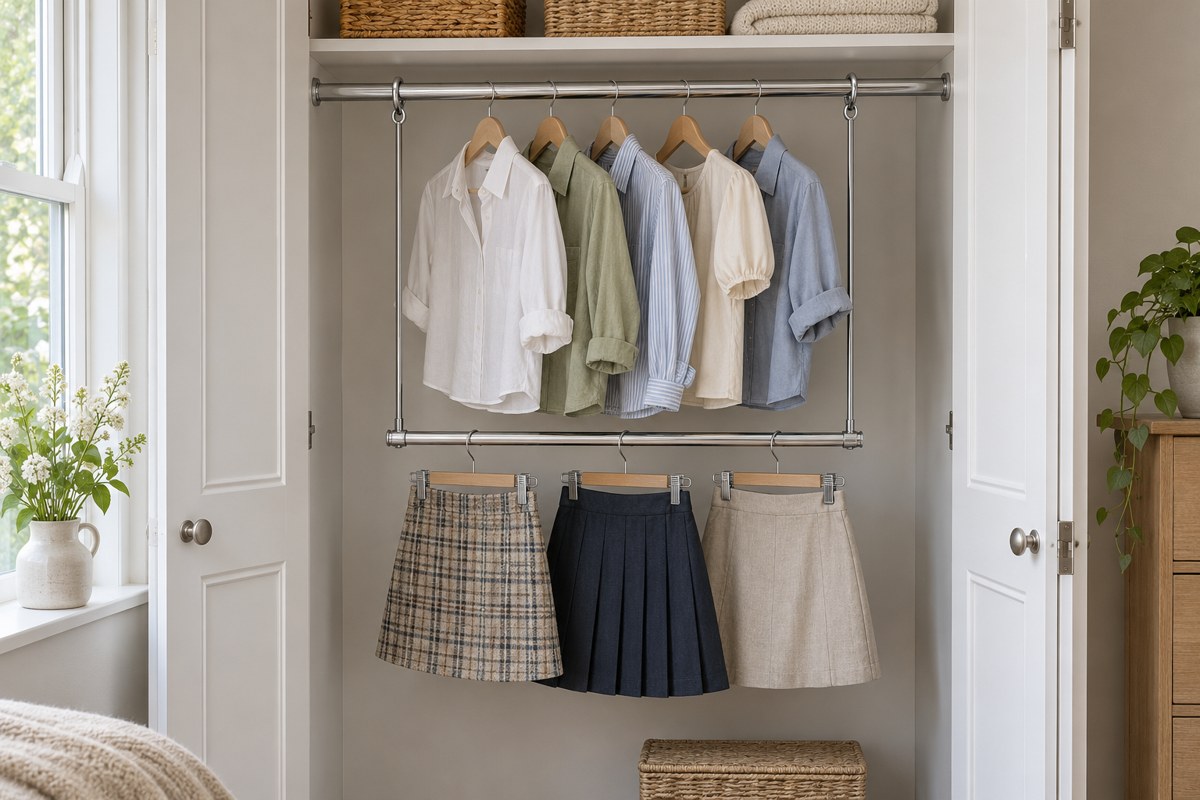
Three ways to add a second hanging level
Sizes refer to the extender. Check the actual position of its lower bar on your rail.
Five drop settings
Yeetburg adjustable double hanging rail
A rigid two-hook extender with a telescoping lower bar and five published height settings.
- Published range
- 43.2–76.2 cm wide · five height settings
- Access
- Telescoping bar and clipped height settings
- In the pack
- One extender
What to check Check how the hooks fit the host rail. Measure the upper hem and lower hook clearance at the actual setting, and confirm the host rail can carry the full load.
View on Amazon — Yeetburg adjustable double hanging railA wider range of height settings
Storage Maniac adjustable double hanging rail
A width-adjustable lower bar and folding side supports. The listing gives nine nominal height positions.
- Published range
- Approx. 45.5–75.4 cm wide · 22.9–96 cm overall height
- Access
- Hand-tightened fixings and nine positions
- In the pack
- One extender
What to check Check the complete fitted drop and garment clearance at the actual position. Follow the tightening sequence and verify the host rail and brackets.
View on Amazon — Storage Maniac adjustable double hanging railFixed-width and fixed-drop layout
Whitmor fixed double hanging rail
A rigid two-hook extender with a fixed lower crossbar. The listing drawing gives about 77 cm of width and 86 cm overall height.
- Overall frame size
- Approx. 77 cm wide × 86 cm high
- Access
- Fixed crossbar and two hooks
- In the pack
- One extender
What to check Make sure the exact drop and width suit your two garment rows. Check that both upper hooks seat and the host rail and fixings can take the full load.
View on Amazon — Whitmor fixed double hanging railSide-by-side dimensions
Scroll sideways to see all columns.
| Extender | Width | Height arrangement | Format |
|---|---|---|---|
| Yeetburg | 43.2–76.2 cm | Five settings | Adjustable rigid supports |
| Storage Maniac | Approx. 45.5–75.4 cm | Nine settings | Adjustable folding supports |
| Whitmor | Approx. 77 cm | Approx. 86 cm overall | Fixed width and height |
Measure both garment rows before adding a bar
Choose the short clothes you would hang above and below. Measure from the existing rail at the hook contact point to the lowest upper hem. Then measure the loaded hanger and garment you want on the lower rail. Include the hook, shoulders, loose sleeve and any movement you need to lift the hanger away. Check the clear height above the wardrobe floor or top of any drawer unit.
Mark a possible lower bar position. The upper hems need room above the new bar and above the hooks of the lower hangers. The lower row needs enough drop to hang freely without resting on the base. A product’s overall height can include its upper hooks and fittings. Check where the lower bar actually lands on your rail and compare that with your marks.
Check the host rail and the full loaded weight
Measure the diameter and profile of the existing rail where the hooks will sit. Check the shape at both ends and the position of any centre bracket. A hook that seats on a round rail may fit differently on a broad oval profile. Use the instructions for the exact extender and wardrobe. Make sure the hooks rest where the maker intends and that the two sides can hang level. Leave room to slide or lift hangers around the supports.
Use a tape measure to mark the lower bar on both sides of the cabinet. Try a pair of empty hangers under the mark and move them in the same direction you will lift them. A shelf above the upper row can limit that movement, while a tall drawer below can restrict the lower row. Check both rows with the same door position.
The host rail carries the upper clothes, the extender and all lower clothes. Check the rail, brackets and wardrobe manufacturer’s permitted loading, then check the extender’s own limits. Keep the total within every applicable limit. If a load rating or the condition of the support is uncertain, ask the maker or choose a suitable separate solution. The wardrobe rail guide covers replacing or fitting the main rail.
Choose a fixed bar or an adjustable range
The Yeetburg rail adjusts from 43.2 to 76.2 cm wide, and has five listed height settings. It can suit a bay where both your measured height and width fall into the range. Check the available positions before assuming any measurement between the endpoints is possible. Install the upper hooks and side-bar clips as directed.
The Storage Maniac rail gives nine nominal height positions and a telescoping lower bar. Its wider published drop range helps when the two garment rows differ in length. Check how the maker measures the height and where the lower bar sits on the installed host rail. Use the fixing sequence for the chosen position and tighten the connections as directed.
The Whitmor fixed rail is about 77 cm wide and 86 cm high overall. Its fixed shape is worth comparing when the bay and both rows already fit that layout. Leave room around the upper hooks and any rail bracket. A fixed width can take up most of a narrow bay and give long garments little side room.
Try a few garments before filling the lower row
Fit the extender empty and follow the exact instructions for its hooks and fasteners. Check the rail sits level. Hang a light representative garment at each end and one in the middle. Open and close the wardrobe, then lift a hanger out from each row. Check the lower hangers and sleeves against the doors, drawer front and wardrobe sides. Keep the tallest clothes out of this section if their hems cross the lower rail.
Test the layout again with a typical load within the permitted limits. Change the setting or the garment group if the rows interfere with one another. In a wardrobe for two people, the shared wardrobe guide shows how to preserve one long hanging area while making a separate short section easy to reach.
Questions before you choose
How much drop do I need for two hanging rows?
Measure both garments on their intended hangers. Leave room above the lower bar for its hooks and below it for the longest lower hem.
Will the hooks fit any wardrobe rail?
Check the maker’s hook drawing against the actual diameter and shape of your rail. Include any rail brackets that interrupt the fitting position.
How do I check the weight?
Add upper clothes, the extender and lower clothes. Check the host rail, wardrobe brackets and the extender’s limits.
Do adjustable rails fit every height in the range?
Check the available positions in the drawing. An extender with set holes or clips adjusts in steps.
What if the lower bar catches long clothes?
Give those garments their own full-height position or change the lower setting if both rows still clear.
How this shortlist was assembled
We checked three Amazon UK variants and compared the manufacturer drawings for width and adjustment. Yeetburg’s published maximum height varies between the listing and drawing, so we show its five settings and recommend checking the exact fitted drop.