
How to organise a top wardrobe shelf
Measure the real shelf opening, group light items in handled cases and make sure each case can be brought down comfortably.
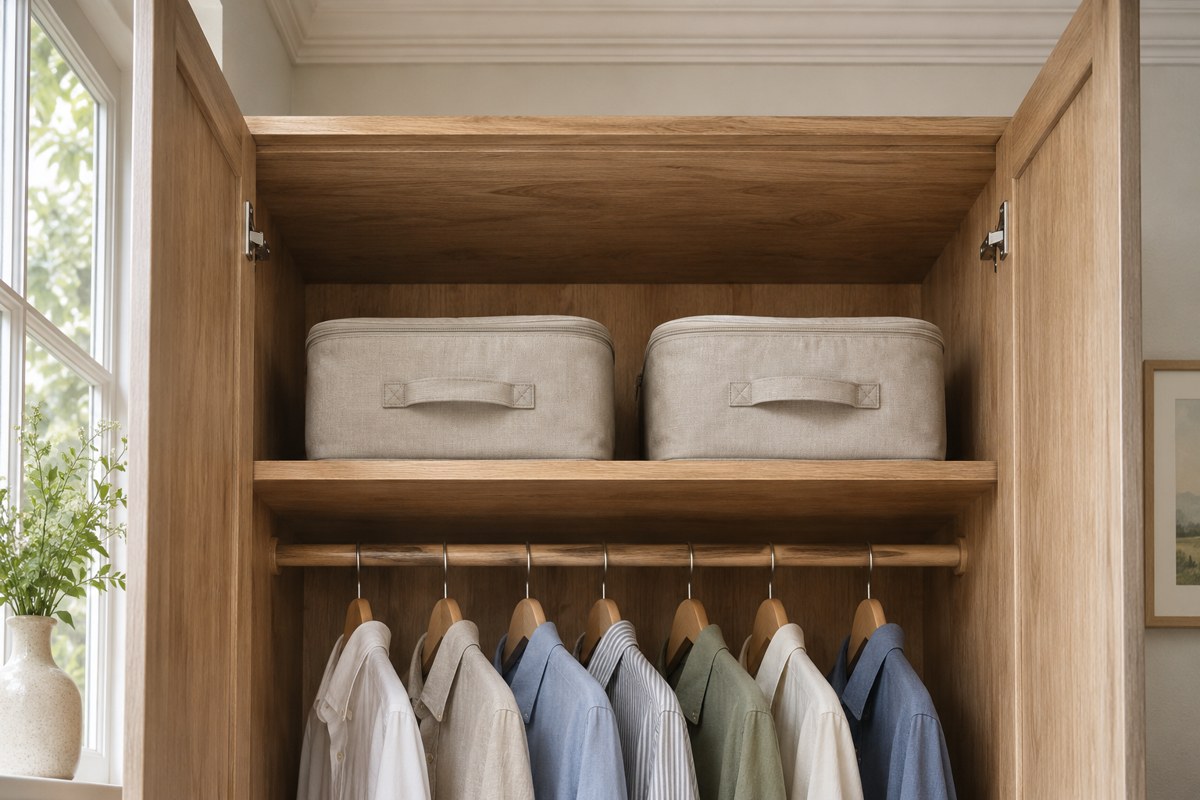
The main decision
Store light groups you can lift down comfortably
Measure the opening at the shelf edge and check the grip with one lightly packed case. Keep heavier items lower and place the handles where you can see and reach them.
Measure the gap you will lift the case through
Start with the top shelf empty if you can clear it safely. Measure its supported width and depth, then measure the clear opening from the shelf surface to the lowest part above it. A rail, door header or hinge can narrow that gap at the front. A case might sit easily on the shelf and still catch as soon as you tilt it to come out. Check both the position where it will sit and the route through the opening.
Look at the shelf edge from where you normally stand. Check whether you can see the handle and put your hand around it comfortably. Test with an empty case or a light cardboard model at the proposed height. If you have to pull a case forward before you can get a safe grip, choose a shorter shape or another position. Check that the shelf and wardrobe are fitted and secured as their maker specifies.
Use small, light groups with a grip at the front
Put items you need occasionally on the high shelf. Spare pillowcases, light accessories or a seasonal group of thin clothing are easier to handle when kept in their own small containers. Dense bedding, filled boxes or a heavy stack of clothing generally belong on a lower shelf. Use the wardrobe maker’s shelf and unit limits. Include the case and the total contents when you check the load.
Check handling as well as the listed limit. A case can be within a shelf’s rating and still be hard to bring down. Keep the case small enough to hold securely and use the maker’s intended grips. If you cannot reach it or lift it comfortably, move it lower. Avoid using the wardrobe or another piece of furniture as a step. Choose a stable, suitable way to reach the shelf and check whether the task is easier from a lower shelf.
A soft handled case can work for light folded groups if it remains within the available height once packed. A rigid open container has a predictable outline and may make the contents easy to see after you lower it. Check its own weight and whether a lid or clips make the case harder to grip. The wardrobe storage bin comparison shows different footprints and openings.
The GRANNY SAYS handled cases are 40 × 26 × 25.5 cm outside. Choose them only where the opening and height allow you to hold both side grips and lift a lightly loaded case down. Set the case on a suitable surface to open the lid. A shallower, lighter group is a better fit where those grips are hard to reach.
Covered storage for occasional clothes
GRANNY SAYS flip-lid fabric bins, pair
Two fabric bins with a flip lid, side handles and a removable base board.
- Per bin · W × D × H cm
- 40 × 26 × 25.5
- Access
- Flip lid with side handles
- In the pack
- Two bins
What to check Check the lid movement against the shelf above. If it cannot open in place, allow room to lift the whole bin out by its handles.
View on Amazon — GRANNY SAYS flip-lid fabric bins, pairArrange a single reachable row first
Put each case with its handle facing out and the whole base on the supported shelf. Give yourself room to get your fingers around the front grip and to support the underside as you bring it down. Avoid positioning a case where it has to rest on the door or project beyond the shelf. In a deep wardrobe, a single row may leave spare room at the back. Use that rear space only for a group you can see and retrieve without handling heavier cases.
A visible label can make the shelf much easier to use. Label the leading face while the case is at a comfortable height. Keep the words short, for example spare covers or summer scarves. If both people use the wardrobe, a shared group can have its own case that either person can reach. The shared wardrobe guide covers the day-to-day positions lower down.
Try taking a case down before filling the shelf
Start with one lightly packed case and place it where you plan to use it. Close the door gently, open it and take the case down again. Look for a catching handle, a lid that needs more headroom or a grip that disappears behind the header. Move the case to the opening you can use most easily. If the contents shift as it tilts, divide them into lighter groups or choose a case that contains them during handling.
Return the case to the same spot and try the next case independently. Leave the first row usable if you decide to add anything behind it. When you change seasonal clothes, reassess how heavy the case feels and whether the chosen spot still works. The wardrobe fit guide shows which clearances to check again if you change the shelf height or door setup.
Questions before you choose
What should go on the top shelf?
Choose occasional light groups in cases you can handle comfortably. Put dense or heavy items on a lower shelf.
How do I measure above the shelf?
Measure to the underside of the upper panel and again at the opening. A header or hinge can reduce the withdrawal clearance.
How much weight can the shelf hold?
Check the maker’s shelf and unit limits. Include the case and contents, and choose a load you can lift comfortably from that height.
Can I use two rows of cases?
Use the back only if its contents can come out easily without shifting a heavy front case. Try one reachable row first.
Should I open a case while it is on the shelf?
If the lid or contents are hard to reach, bring the case down and open it on a suitable surface. Check that you can hold it securely as you lower it.
How we put this guide together
We used furniture securing guidance and the selected case’s published dimensions. The opening example shows the difference between shelf headroom and the usable withdrawal gap.