
Best freestanding drawer units for inside wardrobes
Compare compact fabric and rigid drawer units by width, depth and height. Check hinge clearance, drawer travel and securing requirements.
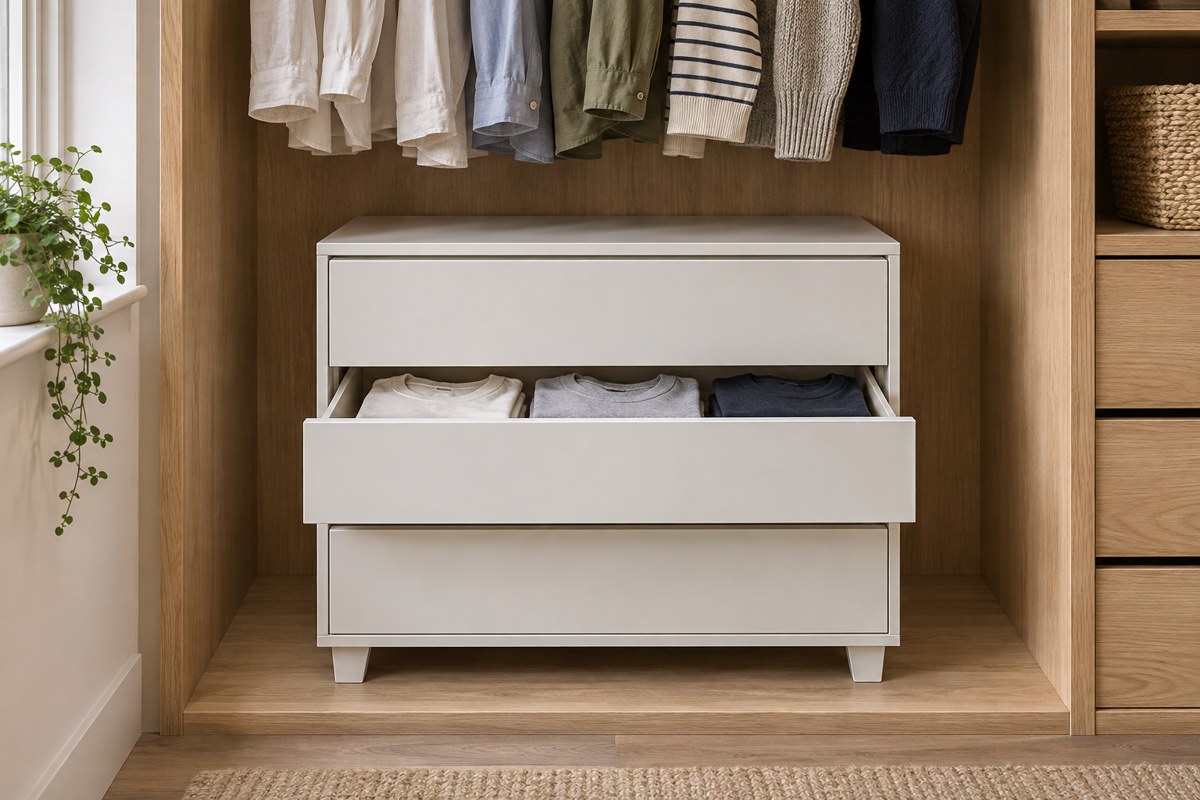
Three drawer units for different wardrobe bays
Use the outside dimensions for the fit check and try your actual folds against the usable drawer space.
Low frame beneath short hanging
COSTWAY two-drawer fabric unit
A short metal frame with two removable fabric drawers and a separate top.
- Outside · W × D × H
- 45 × 30 × 52 cm
- Access
- Two front-pull fabric drawers
- In the pack
- One two-drawer unit
What to check Check the lowest garment hem, drawer front width and whole pull-out path. Follow the instructions for the exact unit.
View on Amazon — COSTWAY two-drawer fabric unitMore separation in a taller bay
Yaheetech three-drawer fabric unit
Three fabric drawers in a metal frame with a rear cross-brace.
- Outside · W × D × H
- 45 × 30 × 76 cm
- Access
- Three front-pull fabric drawers
- In the pack
- One three-drawer unit
What to check Plan a suitable securing point and follow the supplied restraint instructions. Check the lowest drawer clears the wardrobe sill.
View on Amazon — Yaheetech three-drawer fabric unitRigid drawers in a narrower frame
ABBAware Handy three-drawer tower
Three rigid 17 litre drawers in a tool-free plastic frame, with four casters supplied.
- Published outside · W × D × H
- 34 × 44 × 56 cm
- Access
- Three pull-out plastic drawers
- In the pack
- One three-drawer unit
What to check Confirm the fitted height with the caster setup you will use. Check the loaded unit can sit securely as directed and the wardrobe has the full depth.
View on Amazon — ABBAware Handy three-drawer towerSide-by-side dimensions
Scroll sideways to see all columns.
| Unit | W × D × H | Drawers | Where to start |
|---|---|---|---|
| COSTWAY | 45 × 30 × 52 cm | Two fabric | Below short hanging |
| Yaheetech | 45 × 30 × 76 cm | Three fabric | A taller bay with a securing point |
| ABBAware Handy | 34 × 44 × 56 cm | Three rigid plastic | A narrower, deeper bay |
Measure the bay and the opening where the drawer passes
Measure the available width across the wardrobe floor and again at the height of every drawer front. Hinges, a raised sill and sliding-door overlap can reduce the opening at different levels. Check which door position actually exposes the intended bay and note any handle or drawer front that sticks out. A drawer unit can fit inside the wardrobe and still be unusable because the front cannot pass a hinge.
Check the base first. Use a level surface that supports the entire unit as its maker intends. A hollow shelf, raised lip or thick wardrobe mat can change where the feet or casters sit. Include levelling feet and casters in the outside height where appropriate. If you plan to put a short unit under hanging clothes, measure from the base to the lowest hem, then leave space to reach the top drawer.
Check drawers fully open and with clothes in them
Measure from the back of the wardrobe to the inside of the closed door, including any track. Allow for the whole outside depth, the drawer grips and any spacing the installation needs at the back. Then open the wardrobe door and mark the space the drawer needs when you pull it towards you. Leave room to stand and lift folded clothes out. Test it while the other wardrobe door and any furniture opposite are in their normal positions.
If you need to assemble the unit before it goes in, test the delivery route with a cardboard rectangle. If the wardrobe opening is narrower than the body, check how the unit could turn inside the room and whether the maker permits assembly in the bay. Keep enough working room to reach fasteners and any wall restraint.
Check the usable inside space for your largest fold. A wide frame can have narrower drawer liners, curved fronts or a taper near the bottom. Measure the fold against the actual inside width and depth. For fabric drawers, keep the loaded height below the front and check that the base remains properly supported. For plastic drawers, check how far the drawer extends and whether you can reach all the contents with it in its normal open position.
Choose the height, drawer size and support you need
The COSTWAY two-drawer unit measures 52 cm high and 45 cm wide. It can use a short section below hanging clothes if the lowest hem and drawer opening remain clear. Its removable fabric drawers suit folded groups. Check the internal space with your actual folds and follow the maker’s assembly and securing instructions.
The Yaheetech three-drawer unit is 76 cm high, with a 45 × 30 cm footprint. It gives more vertical separation where a tall wardrobe bay has room for another drawer. Check which door position gives access to all three fronts and whether the top sits below the clothes. Use the hardware and installation method the maker specifies.
The Abbaware three-drawer tower gives rigid plastic drawers in a narrower body with deeper front-to-back space. Check the full height including the selected caster setup and the depth needed to open the drawers. Put it only on a base where it can sit securely as the maker specifies and leave room to stand clear of the open drawer.
Fit the unit as directed and try one drawer at a time
Check the instructions before ordering. Some separate drawer units require anti-tip fittings even when placed inside a larger wardrobe. Follow the exact requirements and use only a suitable securing point. If the wardrobe panel is unsuitable or you cannot confirm a permitted installation, use another location or a different type of organiser. Open one drawer at a time and stay within the maker’s loading guidance.
Start with the group you use most often and put it at an easy height. Try the lowest drawer with the wardrobe fully loaded. If you need to move a door farther than the room allows, choose a different position or a smaller insert. Compare fitted pull-out baskets if the wardrobe has a compatible runner system, or lift-out storage bins if the door opening allows a smaller group through more easily.
Questions before you choose
Can a drawer unit fit inside but catch on the door?
Yes. Measure the usable opening at every drawer height and check the full width of each front as it passes the hinges or track.
How much room is needed in front?
Check the full drawer travel and leave room to stand and remove the largest fold. Test the other wardrobe door in its normal position.
Does a freestanding unit need a restraint?
Follow the exact assembly and securing instructions. Check for a suitable attachment point before buying a unit that requires one.
Can I put drawers under hanging clothes?
Measure from the base to the lowest hem and leave room to reach the top drawer. Test the tallest hanger and the usual door position.
How do I measure for a caster unit?
Check the complete height and depth with the supplied caster setup you intend to use. Use a suitable level base and follow the maker’s instructions.
How this shortlist was assembled
We checked three Amazon UK variants against available assembly documents and listed measurements. We distinguished outside dimensions from usable drawer space and kept the securing guidance specific to the unit.