
How to organise a shared chest of drawers
Allocate drawers around daily clothes and reach, fit compartments to real folds and give each person a clear place to return their things.
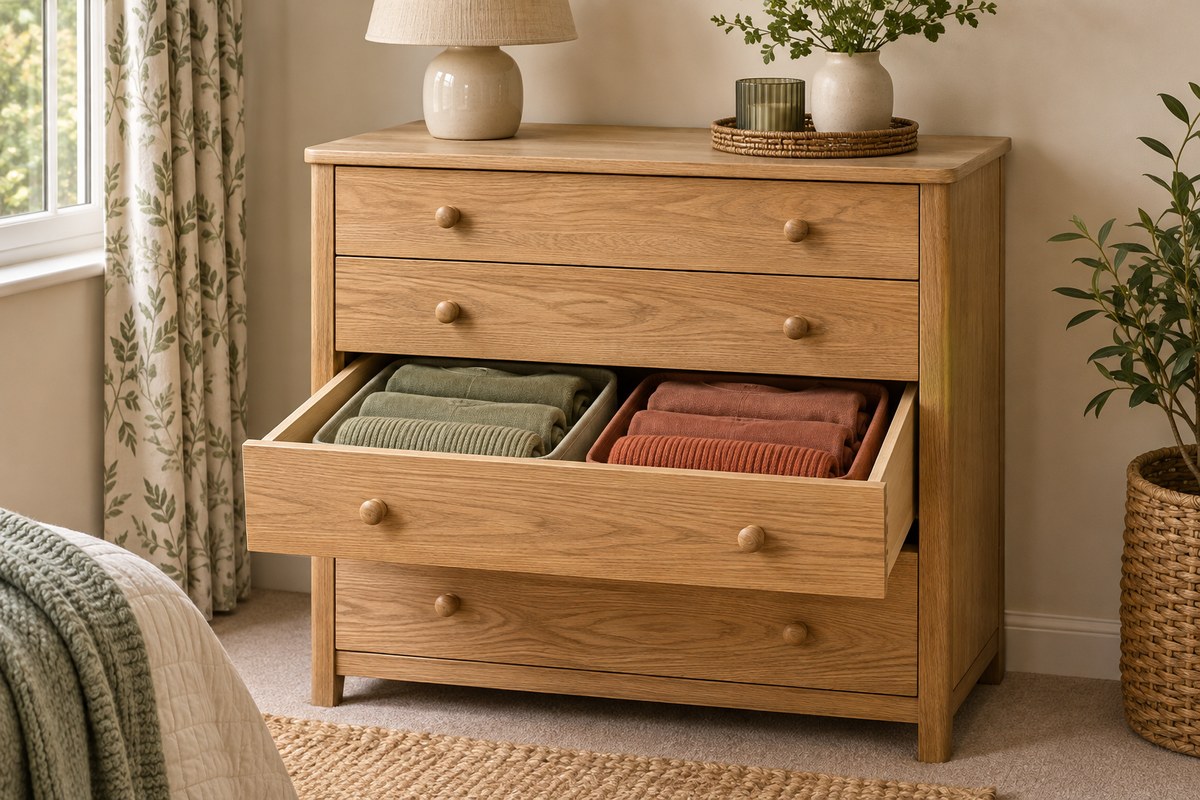
The main decision
Give each person an independently reachable group
Measure both sets of everyday clothes and allocate the useful drawer space by reach and volume. Use separate drawers or clear side-by-side sections and try the routine after washing.
Measure the folded groups each person needs
Sort each person’s everyday clothes into the groups they normally put away together. Fold a representative T-shirt, a bulky top and the smallest pieces in the way you would store them. Measure each group’s width, depth and thickest point. Count how many of those folds you need in a normal week. This gives a clearer starting point than dividing the number of garments evenly.
Measure the actual inside of every drawer. The top drawer may be shallower or have a different opening from the drawers below. Check the inside base at the front and back, the closing clearance and how far it opens. The maker’s overall chest dimensions describe the furniture around those spaces. Use the drawer measuring guide before choosing bins or dividers.
Allocate drawers by reach and daily use
Try a whole drawer for each person’s most-used group if the chest allows it. Keep the easiest drawer height for whoever finds bending or reaching difficult. A low drawer can hold an occasional group for someone who can reach it comfortably. If one person has more folded clothing, give that group the space it needs and use another suitable location for hanging or seasonal pieces.
When you share one drawer, create two clear zones that both people can reach. A front-and-back split can make the rear person move the front group every time. Try side-by-side sections first if the opening lets both groups come out easily. If the drawer opens partway, keep everyone’s daily items in the exposed section and use the rear for an occasional group that can move forward. The part-opening guide shows how to check that movement.
Choose compartments for the actual folds
Put an empty drawer outline on paper and mark each folded group. Add the outside footprint of any bin you want to use. Fabric sides and seams take space, and the loaded shape can bulge if the clothes are packed tightly. Leave room to lift a full bin without catching the next group. If you use dividers, include the width and end fittings in the arrangement.
The DIMJ four-pack includes two 30 × 15 × 9 cm bins and two 15 × 15 × 9 cm bins. On a 61 × 40 cm paper outline, one long bin on the left and two small bins side by side on the right occupy 60 cm across. That leaves little edge space, so test lifting and the actual loaded shape before choosing it. You can use fewer bins and keep a larger hand gap.
Lower drawers and flexible groups
DIMJ grey open clothes organisers
Two long fabric bins and two square ones, with open interiors for items you want to group.
- Outside sizes
- 30 × 15 and 15 × 15 cm; 9 cm high
- Access
- Open top
- In the pack
- Four bins
What to check Check the 9 cm height with clothes loaded. Set up the zipped bases as directed and leave room to grip the bins.
View on Amazon — DIMJ grey open clothes organisersA set of smaller bins can give socks and underwear a clear home without dividing the whole drawer. Larger folded pieces can sit directly on the base if that keeps them visible and easy to pick up. Compare the clothes organiser guide for fabric bin shapes or dividers versus trays for the access difference.
Keep the shared system easy to remember. A regular left and right position can be enough. A secure label at the leading edge can help where two bins look alike. Use a small shared compartment only if both people know what belongs there and it does not crowd the daily clothes.
Test putting clothes away as well as taking them out
Try returning a normal laundry load to the assigned positions. Check whether the fresh clothes can go in without compressing a tall stack against the rail. If the clean group is larger than the daily group you measured, reduce the number stored in that section or allocate a deeper drawer. Keep clothes fully dry and follow their care instructions before packing them away.
Open and close each loaded drawer gently, following the furniture maker’s loading and securing instructions. Check whether a soft bin rises at the corners or a divider shifts when one side is empty. Move a bulky fold lower or shorten a row if it catches. Use the sliding organiser guide for stable support where the fitting surface allows it.
Review the split when routines or seasons change. A small number of thick jumpers can use the space previously taken by many thin tops. Move the occasional group or use a suitable shelf before crowding the easy-access drawer. If sharing the chest is part of a wider bedroom change, the shared wardrobe guide helps allocate hanging and folded storage together.
Questions before you choose
Should a shared chest be split equally?
Start with the actual folded volume and the drawers each person can use comfortably. An equal drawer count may not give equally useful space.
Can two people share one drawer?
Use clear sections each person can reach independently. Side-by-side groups often work better than placing one person behind the other.
How do I choose fabric drawer bins?
Measure the actual folds, the bin’s outside footprint and its loaded height. Leave enough room to grip the bin and close the drawer.
Where should shared items go?
Give them a named group that both people can reach without shifting personal clothes. Keep daily items in the useful exposed opening.
How should we use a secured chest?
Follow its wall-fixing, drawer-opening and load instructions. Keep any interlock in place and open one drawer at a time as directed.
How we put this guide together
We reviewed furniture securing guidance and the selected bin dimensions. The allocation examples use actual folded volume and reach as the starting points, with the maker’s drawer-opening and restraint instructions retained.